To The Pointwith Boris Bozic
Commentary, Opinions, Thoughts and Discussion on Current Events, Politics and The Mortgage Industry

 My word, it’s been a long time since I posted a blog. The reason is fairly simple – unmotivated, writers block and nothing truly compelled me to write one. I’ve come to realize that writing a regular blog is like going to the gym. Once you stop, it’s hard to get back into it. But like going to gym, something happens that makes you go back. Example, you see a picture of yourself, and you rationalize that the camera adds pounds, but my God; did five cameras take this picture of me? Back to the gym you go. As for this blog, it was walking past a display of Father’s Day cards.
This blog is about my father. I could use many adjectives to describe my father, but a simple phrase captures his true essence; he’s a good man. My father is like many dads. Worked hard all his life, and always put family first. Both of my parents immigrated to Canada in 1958 and they met here. They started a family and never asked for a handout. They provided for two sons, and gave them every opportunity to succeed. Our household growing up was not unlike other Canadian/European homes. Mom was the daily disciplinarian; Dad was the executioner. If he had to get involved, I was in deep poo-poo.
I still giggle thinking about the neighbourhood I grew up in as a child, predominately Italian, and how every household seemed to have the same playbook to get their sons to finally come home for dinner. It didn’t matter if the Mom was of Croatian, Italian, Hungarian or of German background; it was the same routine. The moms would come to front door, and call their sons in for dinner. This happened every five minutes, for about forty-five minutes. Exasperated, the moms on the street went to the heavy artillery, the father. Every father on our street had a unique whistle. As kids, we could identify each whistle by tone and number of bursts. When it wasn’t your whistle? You continued to play ball hockey. When it was your whistle? It didn’t matter if you were on a breakaway with a wide open hockey net in front of you; you dropped your stick and ran home. That’s just the way it was.
I still remember my teenage years and thinking, how did these two, my parents, ever survive without my council and knowhow? It was only when I moved out of the house at nineteen that I realized that maybe they’re not so dumb after all. After six months on my own? I believed my parents were the smartest people on the face of the earth. It was only then that I stated to think about the sacrifices and risks my parents took. Meaning, I started to look at them through a different lens, one of respect and admiration. I’m still taken aback at how proud my Dad is to be a Canadian. It’s deep rooted and it’s based from being so thankful. My father escaped from a communist country, one which was oppressive and treated him like a second class citizen. He’s never taken for granted that Canada gave him the opportunity to live a free and fulfilling life. It’s why when I ask him if he would ever contemplate moving back to his homeland, his answer is always the same, never! For him Canada is his home, and this is where his life is. It’s one of the reasons why when I hear the Canadian national anthem I get a lump in my throat.
One of things I am most thankful for is that my dad taught me about my ancestry, and where our family was originally from. I was born in Canada, but I share DNA with family in Croatia. My parents taught me the language and I’m grateful that I can converse in two languages. My dad taught me that when asked what nationality I was, the answer is Canadian, with Croatian heritage. But Canada always comes first. But one thing that Canada has never excelled at is the game of soccer, at least not on a global scale. My dad introduced me to the game of soccer at an early age. I was taken by it right away. The tension, the crowd chanting and singing, and over time I realized the game of soccer was more than just a game. As an adult I decided to thank my father for introducing me to the game of soccer, so we embarked on a soccer journey together.
It started some eight years ago, Euro 2008, in Austria. For those who may not be aware, the European Football Association holds a championship tournament for European soccer teams every four years. It’s soccer at the highest level, and I always believed it was a better brand of soccer than the World Cup. No patsies or soccer fodder can qualify for this tournament. The number of teams that qualify for the Euro is limited; therefore, every team can win on any given day. So as a family we went to Austria to watch three games, all involving the Croatian National Soccer team. The second game we witnessed is still burned in my memory, Croatia versus the mighty Germans. Germany is to soccer what Canada is to hockey. The depth of Germany’s talent pool is so deep that they could probably field two teams for the tournament, and play themselves in the finals. So this game was truly David versus Goliath. Croatia is a country of 4.5 million people; they produce an astonishing number of world class players for such a small country. But still, it’s Germany we’re talking about. Our seats were in the end zone, among the Croatian supporters. Croatian supporters were badly outnumbered by German supporters, but they were loud in voice. I remember looking past my brother to get a glimpse of my Dad as the Croatian National Anthem was being played. I was thinking this must be an extraordinary moment for him. His place of birth became an independent country in 1992, after a brutal war, and today he gets to witness the raising of his homelands flag, and the freedom to sing the anthem without the fear of his former oppressors watching. More importantly, that they couldn’t do anything about it. Back to the game, at best we were hoping for a tie, and silently praying that we wouldn’t be embarrassed. Then in the 24th minute Croatia scored first. To say the Croatian supporters went nuts would be an understatement. Shame there was so much time left on the clock because we all knew the Germans would keep coming. So now we’re into the second half of the game, and then the unthinkable happened, Croatia scored in the 62nd minute. Now we’re going insane, including my Dad. We’re up 2-0, against the Germans! Then in the 79th minute the Germans scored, and I instantly knew that the last 11 minutes of the game would be excruciatingly long. Our seats in the second half were located behind the Croatian net, so we witnessed wave after wave of German attacks. They were relentless, and we got the sense that only time could stop them now. The match clock finally reached 90 minutes, but two minutes were added for “injury” time, or if you wish Academy Award performances for the time wasted by players acting as if they were hit by sniper fire. I swear I stopped watching the game after the first minute of “injury” time. My eyes were glued to the referee, silently and not so silently, imploring him to blow the final whistle. And then it happened, game over, Croatia 2 Germany 1. It was sheer bedlam after that. Total strangers embracing, high fiving each other, you just wanted to celebrate. I looked over at my Dad while a total stranger was hugging me. I could see him squeezing past my brother to come to me. I told the stranger that we would have to continue our love affair later, and excused myself. My Dad approached me, cupped my cheeks with both his hands, looked me in the eye and said, “thank you so much; this is the best gift anyone has ever given me”. He kissed me on the cheek, and hugged me as hard as he could.
It was at that moment that I decided I would do whatever I could to give him this moment again. If it meant having to take a part time job scrubbing toilets so I could afford to do this again, then so be it. I am blessed and fortunate that I did not have to purchase rubber gloves or a toilet scrubbing brush so that I could share these moments with my Dad again. In 2012 we went to Poland for Euro 2012. As you read this, we are in France for Euro 2016. My Dad, my brother and a family friend, who went with us in 2012, decided that the evil, which is far too prevalent in the world today, would not stop us from living our lives. When we started this journey back in 2008, I thought I was doing this for my father. I have come to realize that I have been doing this for myself. If I was to lose every material possession I have tomorrow, the one thing that could never be taken away from me is my memories.
To all Dads, especially mine, Happy Father’s Day.
Until next time.
Cheers,
Read More Add a Comment“I’m great! Okay, enough but me. So what do you think of me?” In my mind that’s how the conversation went between President Obama and Prime Minister Trudeau at last week’s State Dinner at the White House. I’m sure trade issues, environmental concerns, and Canada’s military support in the Middle East all came up in conversation; but I can’t help but think that at some point the two leaders exchanged winks and knowing head nods. The body language spoke volumes, like, this is really cool. Sure, we might have economic issues to deal with, a refugee crisis, security concerns, an obscene amount of national debt, but that should never get in the way of having a good party; and what a party they had.
 In fairness, a state dinner at the White House is not a common occurrence for Canadian PM’s. If I’m not mistaken the last time the head of state from Canada was the guest of honour at the White House was in 1997. President Clinton warmly welcomed Prime Minster Chretien for an evening of Pomp and Circumstance. Let’s see, Clinton and Obama, Democrats; Trudeau and Chretien, Liberals. I find it deliciously ironic that the intelligentsia always campaigns on helping the impoverished, working for the middle class, saving mother earth, but would never dare using photos of a state dinners when campaigning to the masses. That would be too difficult to square. The all-knowing and chosen ones are best fit to suspend reality. There’s no point trying to square the lavishness because it is too complex for simpletons to understand. It’s something that’s always done, and that should be enough. Oh wait, Prime Minister Harper never had a state dinner in his honour. I’m sure it was simple oversight and had nothing to do with political ideology. (more…)
So far the New Year has a theme to it. Headlines suggest that we’re at a precipice, and good lord, don’t look down. And yet millions of people every day leave their homes to experience the joys of riding on overcrowded buses and subways and other forms of less than adequate public transportation. The roads are jammed during rush hour, which now seems to be extended into Saturday and Sunday. I’m assuming all these people taking public transit in the morning, and those navigating city streets in the hopes of getting somewhere, all left their house for a reason. Like maybe, a job?
 God bless the millions, and millions of people who say to themselves, every day, “the four horsemen of the apocalypse may be on the way, but I have bigger things to worry about”. GDP growth forecasts being lowered, what do you think about that? Interesting, but I got to get Precious to daycare on time. Price of oil crashes? My fuel consumption costs just went down because I have to take the kids to hockey, indoor soccer, jazz lessons, piano lessons, Chucky Cheese, to see grandma and grandpa, acting lessons (strictly for my child because he/she is special) and all this by Wednesday of every week. Stock market takes a beating in 2016? Yeah, that’s bad but I don’t have time to think about it because (more…)
I can only imagine what our newly elected prime minister’s schedule looks like. Given the scope of his responsibility it must be challenge to prioritize his time. Managing to attend summits in Turkey, Paris and Davos, Switzerland, while still tending to the nation’s business, must be taxing. The PM also has to balance the competing needs of the constituents in his riding, as well as every other Canadian in this country. Then, there’s the attention he has to pay to the party base, as well as to those who contributed financially to his campaign. And then of course there’s the need to find time for legacy issues; the ones that get you into history books, and sometimes burned in the public’s psyche. The thing about legacies is that they are not necessarily created by design. Sometimes it doesn’t work out. For example, our prime minister’s father, Pierre Elliot Trudeau, Canada’s 15th Prime Minister.
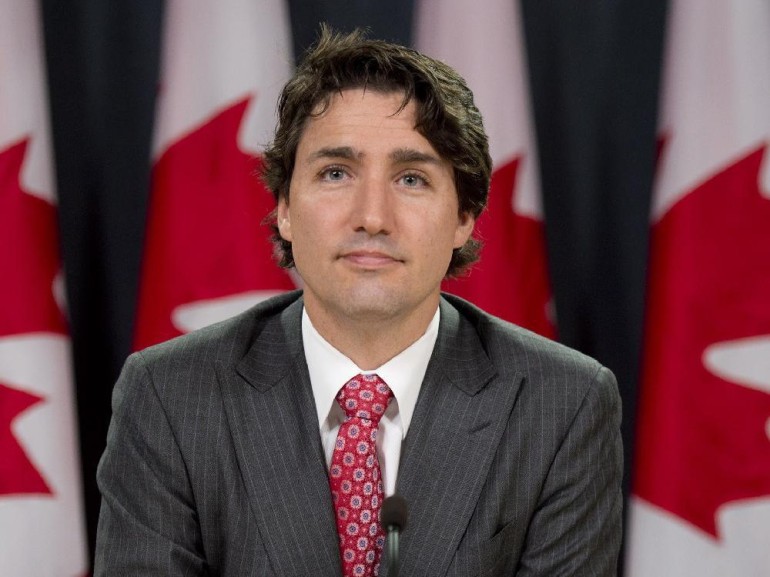 Many Albertans still seethe at the mere mention of Pierre Elliot Trudeau. They think back to the early 80′s, and Trudeau’s National Energy Program, which laid waste to a good portion of Alberta. When you combine the words Alberta and Trudeau, you expect some form of combustion. It’s for that reason I was intrigued to see how our newly crowned Prime Minister, Justin Trudeau, would do when visiting the beleaguered province. I suspect it must be a tough pill for Alberta to swallow, asking a Trudeau for help. But ask they should, and must.
I’ll say this about Jr.; he comes across as having far more empathy than his father ever did. That being said, his father was a man of depth; an intellectual, with an extraordinary wit and a sense of timing. He was the smartest guy in the room, and if you needed convincing, he relished the opportunity to prove it. What Alberta doesn’t need right now is a visit from an eastern elitist with an all knowing attitude. I think what they need is to hear some honesty, and to let them know their government won’t make things worse.
For all intents and purposes, the prime minister said all the right things when visiting Alberta. Frankly, there’s not much that neither he nor Ottawa can do at this time. It’s not like they can snap their fingers and set a new price for oil. Saying Ottawa is there to support Alberta is nice, but it can’t be just talk. There is something that could be done right now. (more…)
Read More Add a Comment It’s the start of a new year.
Sure, many were back to work on the 4th of January, but in our industry things get back to “normal” the second week of January. So, here we are. Like most people, I believe that what’s ahead will be better than the journey just travelled. However, to be totally candid, 2015 was a very good year for me. On all fronts, be it personal or professional. Having a better year will be a challenge, but that’s life. You push, you strive, and you never settle. Frame of mind is critical, and over the last six months I’ve been working on just that.
Not to get all Tony Robbins on you, “awake the giant within…love yourself…blah, blah, blah”, your state of mind plays an import part of all your outcomes. We all have to fight against a self-fulfilling prophecy. If you think it sucks, it may not actually suck, but it will eventually suck. In this day and age it can be challenge to stay positive. We are constantly bombarded with predictions of doom and gloom. Take this week for an example, the Canadian dollar dipped below 70 cents U.S., and a very respected economist is predicting it could drop to 59 cents U.S. And as every info-commercial says, “but wait, there’s more”. It’s now being suggested that oil could drop to $20 USD a barrel. All this in the second week of January. So, how does one pushback against all the white noise?
Here’s what I did. Firstly, I was finally honest with myself, and I admitted that I was an information and news junkie. I became obsessed, and needed my daily fix of bad news. Trust me; it’s not hard to find bad news. In today’s world it’s everywhere. It takes a lot more work today to dodge the bad news assault. Given the reality that we all live in an information world, I came to the conclusion that I had to change my information gathering habits. So no more Fox News, no CNN, and no MSNBC. I would actually turn to MSNBC, knowing full well that within minutes I would want to throw something at the screen. Like I said, I was addicted. Here’s another thing, no more talk radio in the car. Doesn’t matter if it’s sports or news. I came to the conclusions that on too many occasions I would arrive at work with a less than pleasant disposition. Why? Because I invited mindless babbling into my car, which more often than not would just piss me off. So things had to change. There’s no excuse for waltzing through life being willfully ignorant, but given that news is readily available everywhere, I decided that I would control when and where I received my news. The first real sign that my new approach was working was when someone asked me, “what do you think about David Price signing with the Boston Red Sox, and not the Toronto Blue Jays?” I was relieved that I didn’t even know it happened. Me, not knowing about something that happened in sports? That was big!
Here’s what else I did, I replaced information with music. I know that may sound schmaltzy, but it works. Truth be told my car played a major role in my musical listening pleasures. The car has a feature that when you push a button, and say play “artist and song”, it searches the net and finds the song. It also creates a custom radio station for me. For example, Rolling Stones Start Me Up radio station. From there it searches for songs from the same genre. If I don’t like the song it found, I press next. The cool thing about this is that it’s taken me out of my 70’s and 80’s musical time machine. I didn’t know there were so many new artists out there, well, at least new to me. Bands like O.A.R., James Morrison (not the old guy who sings like he’s got a mouth full of marbles) and Augustana. Really talented bands and I love the fact that our 14 year old is shocked that I know who they are.
This may not work for everyone, but I find that I’m in a better mood more often because I’m listening to more music, and not mindless chatter. I still get my fill of information, but in a much more condensed fashion. More importantly, I decide when I’m ready for the info download. My new approach doesn’t change the facts, and what’s happening around me. But it will no longer control me. Based on what’s happening in the real world, and how the year is starting off, I got my music cranked. I also customized a new radio station in my car, David Bowie Ashes to Ashes. Seemed appropriate.
Until next time.
Cheers!
Read More Add a Comment


